
Dhimsa Dance: The choreography of Camaraderie, Strides Of Harmonious Cohesion
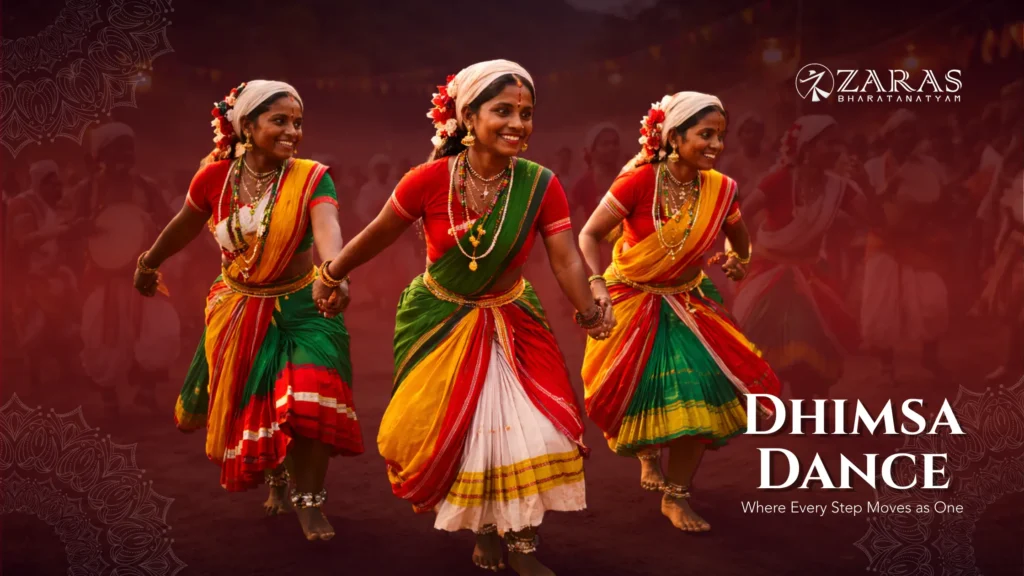
Dhimsa is a zestful and dynamic ethnic art form from the Araku valley of Andhra Pradesh, India. This art form is precisely and concisely the same as the pulsation and respiration of Adivasi communities cohabiting and dwelling in the quaint and scenic Araku valley and adjoining sylvan precincts of vishakapattanam , Andhra Pradesh. However, the genesis of this art form can be sketched from the koraput district of Odisha. Due to its incessant and unabated performance it vehemently transpired and established itself as an edifying and indisputable cultural diadem of Andhra and Odisha outskirts.
Etymologically the term is procured from the systematic, vivacious and metrical reverberations and enunciations generated by the rapid plummeting movements made by the feet of the dancers which literally means ‘sound of the footsteps’. Its not purely and solely a dance performance on dias to amuse and enthuse the audience but it is total, all consuming jubilation and beanfeast of the entire clan. This dance has a cathartic impact on the entire community after their relentless and stressful physical labor or at times to mark the conspicuous occurrence of humble tribal existence. Dhimsa dance is in fact ‘a dance of solidarity and cohesion’ staged by children, youths, old, of all genders homogeneously. They belong to variegated tribes such as Bhagata, Valmiki, Khond, Gadaba and Kotia tribes.
Besides this, this dance aims at endorsing and espousing an infrangible and everlasting kinship and amicability with adjoining villages while one dancer from a village call on another for the sole purpose of participating in the beanfeast of that community harbouring harmonious sodality. This exchange is known as ‘sankidi kelbar’. It is believed that through this dance the women bring upon celestial graces for the good will of their household and community life.
The dance is bleak and vague without the escorting of platitudinous and banausic instruments plied by the male musicians. Percussion and wind instruments offer the impetus and the momentum for the dance. Cardinal devices used are dappu, tudummu, mori, kiridi and jodukommulu. The dancers are luminously clad in dazzling and lustrous colours of yellow, red and green. Besides this they also bedeck themselves with ethnic regalia that makes the whole show a perceptibly an enthralling and entrancing optical pageant.
Dhimsa is a very breath, throbbing pulse and enlivening heartbeat of the ethnic community of Karnataka. This art form occupies a pivotal position in almost all the religious and non religious festivities and functions like chaithra purab the annual hunting and spring Festival, weddings, local fairs and other gatherings.
In a nutshell, this Dhimsa dance is an unavoidable and ever celebrated and flourished artistic ingredient of all major congregation and concelebration